Thursday, March 26, 2020

Three ways internet affects a teenager

3 WAYS INTERNET AFFECTS A TEENAGER

Image result for 3 WAYS INTERNET AFFECTS A TEENAGER

    Have you ever wondered how much time you waste online? If you haven't perhaps you are so addicted that you don’t even realize it. Internet addiction refers to the need of using an electronic device. It’s also seen as a mental problem that has to be treated by doctors. Besides, it can cause stress on friends, family, and even on classmates. Internet addiction affects a teen’s life in 3 ways: their eyesight, their studies and their sleep, as well as their interaction with others.


Image result for eyesight   First of all, using the internet too much affects your eyesight. It is not a big deal since you can easily fix it by putting on glasses. However, there are people that can’t afford them or that simply don’t like wearing them. To avoid it, first of all you shouldn't be using your phone in bed when the light is turned off and you are close to the phone. This fact is really important because it is what usually happens, although not to everybody but it might happen to you. Moreover, being on the phone a lot of time or watching films close to the screen can affect your eyesight too (Mazzola). If you already use glasses, it can also affect you since your myopia can increase. So, even if it's not a big deal, you should be aware of it and try to avoid behavior that can affect your eyesight.


Image result for study and sleep   Another way that internet addiction can affect a teenager’s life is both in their studies and in their sleep. I put both of them together because your sleep is basically reflected in your studies since every time there are tests or quizzes you sleep less. A teenager usually gets distracted by any device, not only with the phone, and usually before going to sleep (Mazzola). It affects your studies since you lose so much time on the phone, computer, ipad… but, mostly on the phone. Infact, “50% of teens admitted that they feel addicted” (Joyce). Have you ever imagined your grades if you use your phone in a moderate way? They will increase immediately. Not only, but staying with the phone at night makes you go late to sleep and the day of your test you are tired and as a result you can’t concentrate well enough. Also, it takes time from your review time, since it is usually at night, before going to sleep so you have it recently for the next day. If you keep time on the phone during the day, then you will sleep less since you’ll be going later to sleep. “Among more than 20% of the people use it 3 hours or more before going to sleep and 55.3% use it at least 1 hour before going to sleep” (Mazzola).


Image result for interaction with others
   Finally, it can affect the way you interact with others. People might lose friendships if the only thing they do is stay at home being online without communicating with anyone. Nowadays people just chat online, play online, work online and not everyone goes out and interacts with others. People might be so addicted that they can even lose sleep, nutrition and they can get mental problems if they keep too much time online without going out, talking with others. It is so important to communicate since you can express yourself, have fun, and relax. Besides, these people might struggle to have face to face conversations since they are not used to it or even they might struggle to focus on the task at hand, have health concerns and also develop brain problems.


   In conclusion, nowadays there are people so addicted that they even get distracted every time the screen turns on to see the message. They might go online and check either WhatsApp or instagram twice or 3,4,5... times even if they didn't receive any message. It is said that girls are more addicted than boys, but depends on which type of social media. (Lenhart). Digital devices have transformed people’s lives with no doubt. But, don’t forget, you can always prevent and avoid using so much technology since it’s up to you, and you will have a better life. It’s not that hard!


WORKS CITED
Joyce, Amy. “Teens Say They’re Addicted To Technology. Here’s How parents can help”. Washingtonpost.com . washingtonpost. 3 May 2016  Web. 4 Mar 2020.

Lenhart, Amanda. “Teens, Social Media & Technology Overview 2015”. Pewresearch.org.  Pew Research Center. 9 Apr 2015. Web. 17 Mar 2020.

Mazzola, Jessica. “Nighttime Texting Linked To Bad Grades, N.J. Study finds” nj.com. Nk advance media. 8 Oct 2015. Web. 4 Mar 2020.

Wednesday, March 25, 2020

Effects of nighttime texting-By Nacho Morella

Have you ever thought about the effects of nighttime texting? When you know the three ways in which nighttime texting affects teens, you will stop doing it. These are the three ways in which nighttime texting affects you: lower grades, insomnia, and not socializing.


The first effect of nighttime texting is regarding your grades. Your grades can be very much affected by the habit of nighttime texting. If you use your phone before sleeping your brain thinks it is daytime and that you shouldn’t sleep, so even though you sleep, the quality of rest isn’t the same. Another problem of not sleeping is that when the next day you have to spend around 8 hours at school, you won't be fresh and as awake as you would be if you slept more (Mazzola).This problem will probably affect you because you won't be as attentive a s you would be if you didn’t text a night.


The second problem of nighttime texting is insomnia, which is related to the problem of your grades. It is scientifically tested that a teen should sleep between seven and  eight hours a day. Pediatricians have tested that a kid should sleep this hours to have an active life. Let’s say you go to bed at eleven and you have to wake up at six, if you slept directly you would sleep seven hours, which is the minimum recommended time to sleep. If you stay between half an hour and one hour and a half, which is what you normally stay with your phone, you wouldn’t be getting enough sleeping hours.


The last problem has to do with the one before and it is not socializing. If you are tired you don't socialize because the only thing you want to do is to sleep. So if you don’t socialize you won't have friends. The problem of not socializing doesn’t occur only in teens. Some parents spend so many hours on the internet and they are so addicted to it that they even forget their kids exist and that they have to take care of them (Young).


In conclusion, nighttime texting has a lot of bad effects on a teenager and you don’t win anything by doing it. You get bad grades, don’t get enough sleep, and don’t have friends because you don’t socialize. So try to stop internet addiction and, if you can, also help others living life without an internet addiction and enjoying more!

Works Cited 
Mazzola, Jessica. “Nighttime Texting Linked to Bad Grades”. N.J.com. NJ. 8 Oct. 2015. Web. 18 Mar. 2020.

Young, Kimberly. “What You Need to Know About Internet Addiction”.Ted.com. Ted. 5 Jan. 2015. Web. 18 Mar. 2020.

Tuesday, March 24, 2020

SPOUSAL INTERNET ADDICTION

See the source image

Is your spouse on the Internet 24/7 and they have no time for you? If so, your spouse may be addicted to the Internet. Internet addiction, which is sometimes called compulsive Internet use, is an addiction where people have a craving to perform one or more activities online (Internet Addiction). This can include playing games, using social media sites, gambling, or simply browsing. This behavioral disorder may see people become addicted to online use (Internet Addiction). Internet addiction affects an adult's life in three ways: Socially, Mentally, and Physically.

See the source image
Humans are social by nature and naturally cooperate, care for one another, especially family, and compete with one another (DeMichele). With the rapid global spread and growth of the Internet, there are few people that do not use it regularly. Because of this, some new social events, which includes Internet addiction, like cyberbullying, grooming through social networks, social isolation and racism are becoming more and more common (Social and Psychological Effects of the Internet Use). Internet addiction can cause social problems for people because some sites show material that is inappropriate and misleading, and gives ideas that may show suicide as a solution to some peoples problems (Social and Psychological Effects of the Internet Use). This can be very harmful to someone that is already depressed or going through a hard time. With an unhealthy amount of time spent away from real people because of Internet use, it can affect relationships with others, like spouses or children, and even lead to divorce.

See the source image


For these people that are addicted to the Internet, it can also affect them mentally by reading too many stories about tragedies that can cause depression and even lead to anxiety disorders, or reading social media chat boards where people talk negatively about their posts which can cause irritation, depression or anger (Can the Internet affect your mental health?). People are proud, and when they read a negative comment by someone on a post or picture they posted, it can have negative effects.
See the source imageInternet addiction can be so bad that people don't eat or sleep for fear of missing out on something. Without proper nutrition, exercise and sleep it can start to affect people physically. The human brain and body needs food, exercise and sleep to function properly to fight infections, keep blood pressures in a healthy area and more. It can lead to weight gain or weight loss, carpal tunnel syndrome, dry eyes, headaches, poor personal hygiene and neck and back pain (Cocke). 


Whether social, mental or physical, the negative effects of addiction to the Internet can sometimes go unnoticed by the other partner, sometimes until it is too late (Samantray). Addiction can happen slowly over time or quickly within a very short time and affect different people in different ways. Some people are so obsested with the endless possibilities available on the Internet that they forget about or don't even realise the consequences. Regardless of the consequences that Internet addiction has on people, without a doubt it has a tremendous social, mental and physical hold over an individual, causing a disconnection from the real and virtual worlds, where the addict slowly loses grip with reality (Samantray). If you think your spouse has an Internet addiction, help is available through lots of places, including your family doctor.

See the source image


Ethan Ritchie                                                                                              Wed. March 18th 2020 

Works Cited

“Can the Internet Affect your Mental Health?” www.mentalhealthguide.com. Web. 15 Mar. 2020.

Cocke Anna.”Internet addiction and health effects” www.howtoadult.com. 28 Nov. 2018. Web. 15 Mar. 2020.

DeMichele Thomas. “Myth/Fact. Humans are Hardwired to be Social Beings”. www.factmyth.com. 22 Sep 2016. Web. Sun 15 Mar. 2020.

“Internet Addiction”. www.addictions.com. 15 May 2019. Web. Thu 12 Mar. 2020.

Rasa Candice. “3 Guidelines for Spouses Affected by Partner’s Addiction” www.gottman.com. 27 Jan 2017. Web. 4 Mar. 2020.

Samantray Snigdha, ResearchGate. “Internet Addiction and Relationships: The Psychology behind It”. www.researchgate.net. Feb 2015. Web. 4 Mar 2020.
“Social and Psychological Effects of the Internet Use”. www.ncbi.nlm.nih.gov. 2 Feb. 2016. Web. 15. Mar. 2020.


INTERNET ADDICTION


    Most teenagers and even adults are addicted to the internet. According to the information from the article by Jessica Mazzola, internet addiction can seriously affect the quality of sleeping, attention of studying, and relationships between people. But I want to tell you that mobile phones do more harm than that. Three more serious problems caused by overusing the internet are eye damage, cyberbullying, and depression.


    We all know that staring at your phone for long periods of time can do irreversible damage to your eyes, but it still doesn't get a lot of attention. The phone collects so much information that colors appear on the screen, and the changing light can cause constant irritation to the eyes. When our eyeball goes to catch this light, the surface of the eyes are damaged. It will also irritate your eyes and make them dry and tired. You also have blurred eyes and a fear of light from looking at your phone for too long.This is only a short period. We may not be aware of the damage. Staring at the phone screen for a long time will make the eyes blink less. It is easy to cause visual tiredness. Your eyeballs will feel dry and tired. If you look at your phone for a long time, it will cause other illnesses. (Eye Center of Texas)
    The second effect  is cyberbullying. When we use various social software, we leave a lot of our personal information behind like phone numbers, email addresses, home addresses, or media accounts. When we post photos or text content, it may cause some people to dislike or object.
When you make them feel unhappy and uncomfortable, there are certain types of people who will attack you by comments. They may be looking for your personal information that you left on social media and then harass you. This can be very stressful because there are so many things that can come at you. You will feel inferior and lose confidence. This can cause you to be unable to work and communicate with people in your life, and even everyone around you will attack you with words. You may lose your job and break up your relationship, which is hard for most people to bear. Every year, many people commit suicide because they cannot afford the violence from the Internet and everything happened around. (Ikeda Kayoko and Nakamura Kazutoshi)
    The last effect of overuse of cell phones could be depression. It has a lot to do with cyberbullying. When you're faced with a bad comment, you tend to look sad, but that's not what I'm talking about. What I'm talking about is what happens when people lose their phones, run out of battery and the network. Nowadays, mobile phones have become a necessity for people.
It's enough for people to know all around the world on their phones without going out, but with that comes endless messages and emails. We will become less and less satisfied with the amount of information, which will lead to addiction to mobile phones and the Internet. Think about how it would feel if you were attached to something and then you suddenly lost it. We will become very uncomfortable, very lonely, very whiny, and very sad. It's the same as suddenly having no cell phones, no Internet and no battery. According to a survey and experiment, most people are sad and irritable because they can't use their mobile phones. Long-term use of mobile phones can lead to emotional instability. (Ikeda Kayoko and Nakamura Kazutoshi) When you can't free yourself from discomfort, you're addicted to the Internet.
    This is the damage Internet addiction does to your eyes, the life affected by Internet violence, and the expression controlled by the Internet. The Internet is one of mankind's greatest inventions, but it must be used properly in order to be good for your whole life.

Work Cited:
“Can You Get Eye Damage from Cell Phone Use?”. Eyecenteroftexas.com. Eye Center of Texas. 21 Nov 2017. Web. 18 Mar 2020.

Jessica, Mazzola. “Nighttime Texting linked to bad grades, N.J. study finds”. Nj.com. Advance Local Media LLC. 17 Jan 2019. Web. 18 Mar 2020.

Ikeda Kayoko and Nakamura Kazutoshi. “Association Between Mobile Phone Use and Depressed Mood in Japanese Adolescents: A Cross-sectional Study”. Ncbi.nlm.nih.gov. National Center for Biotechnology Information, U.S. National Library of Medicine. 18 Dec 2013. Web. 18 Mar 2020.

Monday, March 23, 2020


INTERNET ADDICTION

Are you an enthusiastic video game player who spends hours consecutively playing? Or maybe you are a person who likes to post everything you do on social media? To be a little more concise, do you think that the virtual world affects your daily life? If that is the case you might suffer from IAD, which is short for internet addiction disorder. This behavior has not been classified as a disorder yet, but it has been given increasing attention. Since there is no standardized criteria for diagnosing IAD, there is a lot of different data about it. Estimates of its frequency among the global population go from 8% all the way up to 38%. With the introduction of smartphones, IAD has been drastically increasing (Gregory).

Risultato immagini per psycom

IAD has many negative effects, ranging from a physical level to a mental level. This is the reason for which we should create awareness about it and explain its symptoms.

Now, there shouldn't be misunderstandings about this disorder. Just because you are a person who spends a god amount of time online it does not mean that you are an addict; at least not until the internet starts eating up time you should spend with friends and family or in which you should be working. The brain chemistry of people with IAD is similar to the one of people with other addictions, such as drugs and alcohol. What this means is that it works pretty much the same way. You stay online and your brain likes it as much as you do, it releases dopamine (think about it as pleasure), and every time you think about the internet your brain wants more and more because it releases more dopamine. That is how dependency builds up, in a sentence.

For other people instead, virtuality is simply escape from reality (Young). People who are depressed often think their real life is miserable, and build a virtual one in which they are better under their own eyes. If instead you are socially challenged, spending time on the internet will make you more comfortable because interaction is limited to chatting or playing online. This is just a vicious circle because the more time you spend in your fake world, the more you will come to hate your real one.

Risultato immagini per internet addiction disorder

Internet addicts often lie about the amount of time they spend online and about their mental situation because they are scared of being judged. If you want to help somebody who is suffering from IAD you have to be gentle and comprehensive, or you will worsen the situation and make them feel even more guilty. Yes, internet addicts do feel guilty about what they do, but they cannot do anything about it. It is stronger than them; they have to spend time online. Not doing so will cause them a terrible anxiety because they cannot wait to get back to their virtual life. Once they do get back to it, they will feel overly happy, causing alternate peaks of sadness and then happiness. The latter are symptoms of bipolarism (Gregory).

Staying all day in front of a screen will severely limit your social interactions and isolate you. Internet addicts may forget how to conversate and act with people and will become socially challenged. They will fail to set priorities in their life because the internet comes before anything. This may cause the not to work or study. they will lose the conception of time, and everything, including food and water, will have to wait and leave space to the online realm (Gregory).

You might be surprised to know that these are less than half the symptoms, but I am sure they would discourage anyone from using their PCs and smartphones too much. Along these mental symptoms there are also many physical symptoms, such as hand, back, arm, and head pain, and failure to sleep, eat, and bathe, the last of which are simply projections of mental conditions (Gregory).

Risultato immagini per shadow

I will make it clear and easy to understand: in conclusion, do not use the internet too much. You would not want to become merely a shadow of some imaginary virtual hero or of a profile that displays all but what you really are.

Works Cited

Gregory, Cristina. "Internet Addiction Disorder". PSYCOM. 22 May 2019. Web. 18 Feb 2020.

Kimberly Young, for having created the Internet Addiction Test and being the first researcher of IAD in the Americas.


3 WAYS HOW INTERNET ADDICTION AFFECTS OUR LIFE


How does internet addiction affect the way we behave and our health?
The internet can cause addiction problems in adults and kids and is one of the most common problems studied these days. According to statistics , about 55.3 percent of people text and use the internet at least an hour, and 20% 3 hours or even more.(Mazzola.) In my opinion,  Internet addiction causes changes in interacting with people,  damages our ability to focus and ,particularly for young people, leads to health and safety concerns. 


With the more frequent use of the internet, interactions among people have changed. The interaction that worsens over time is the parent-child one because there are often discussions on the time of use of these devices. Furthermore, by this time, most people bring their mobile phones everywhere and teens, or even adults, can adapt aggressive behaviors when not having them . Another common device used is video games that can bring violence for their strong and aggressive images (Lenhart). Finally, resolving or changing the attitude and behaviors toward these devices can bring better health and relationships with others. 


Another problem of these devices is the loss of the ability to focus. According to researchers, the devices led to unstoppable distractions . In fact, high percentages of teens admitted that they watch TV, use social media and text while doing homework. (Joyce) Moreover, also adults can get easily distracted while they are working. For example, they may start to use facebook or watch videos. Teens that are addicted spend most of their time using them continuously also until 4am. This can bring to insomnia that damages your mind (Mazzola). In addition, this negatively affects your work and behaviors. 

This lack of sleep and tiredness have brought more and more studies by researchers that have made it one of the main problems of health concerns. Although, insomnia is not the only problem that attracted the attention of researchers. Another principal problem is the participation in dangerous challenges posted on the internet to be considered cool in the eyes of someone that we may not even know. 
Many times these challenges brought death or serious harm. The most affected people are teens between 12 to 19 years old (Lenhart). I believe that teens do these challenges because most of us want to appear cool to the appearance of others because it gives us satisfaction, popularity, and confidence that maybe, before doing that challenge or photo, we didn’t have. Or, another case, may be that if someone more popular does something considered “cool”, teens less popular tend to copy his actions without thinking about the consequences and may put themselves in danger. 

In conclusion, I think that  we should be preoccupied primarily about our safety whenever we want to do something. Furthermore, I believe that we think that we are not addicted to our phones and that we definitely would want to use them less. Most of the time, we enjoy the time we are not with our  phones because we can do a lot of things and we do not get distracted by these devices. To conclude, we know that we should use them less but sometimes those distractions are not easy to put away. However, with a little more control of the amount of time spent on our phones, we would enjoy our families and friends more.


WORKS CITED :
Joyce, Amy. “Teens Say They’re Addicted To Technology. Here’s How Parents Can help.” washingtonpost.com. Washingtonpost.  3 May 2016. Web. 20 Feb 2020.

Lenhart, Amanda. “Teens, Social Media & Technology Overview 2015”.  Pewresearch.com. Pewresearch. 9 Apr 2015. Web. 20 Feb  2020.

Mazzola, Jessica. “Nighttime Texting Linked To Bad Grades, N.J. Study Finds”.  Nj.com. 08 Oct 2015. Web. 20 Feb 2020.


Sunday, March 22, 2020

MODERN ADDICTION: INTERNET ADDICTION


“An over-indulgence of anything, even something as pure as water, can intoxicate,” 
says Criss Jami. Every person around the world has at least one obsession over something.
Addictions have become more common each day. The most common ones are gambling, alcohol, and nicotine. However, we cannot realize the threat to ourselves and our children. The ınternet seems innocent, but why can’t people leave their phones? Internet addiction has become a part of our lives, and it is badly affecting our teens’ success, social life, and health.

Multitasking is dealing with more than one task at the same time. It sounds like it is a useful thing, but this is not valid for the internet. In a survey, many teens admitted that they watched TV, used social media, and texted while doing school work (Joyce). However, in the end, the quality of their work is very low. Therefore it affects their grades at school. Next, teens lose the ability to focus on something. Therefore, neither can they pay attention in class, nor finish their homework quickly. As a result. they spend too much time learning something new and finishing their homework.


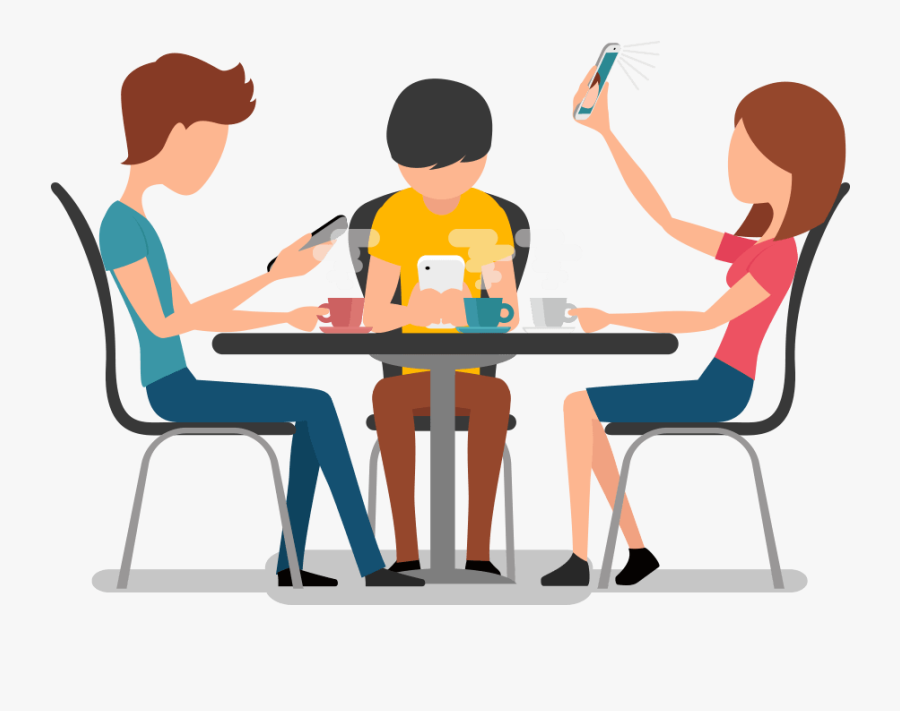
BlogPostImageSecond of all, our social life is changing because of the internet. Nowadays, in a cafeteria, we can see a group of teenagers sitting at a table together but they are isolated. All of them have a phone in their hands, surfing on the internet. When we are online in social media, we see lots of different content that pops up to grab our attention. Usually, the first thing that catches our eye is the photos of other people’s lives. Our teens always get distracted by them. Their ideas change, develop in a way that those famous people accept. Teens started to decide on certain standards to be happy. For example, they bought new clothes and other things to become similar to the famous person that they followed on social media. The worst is that they created a fake place that they can escape from their real-life and be happy such as online games. (Young) Also, they started looking for happiness in likes and comments made by other people. In other words, it is a world that consists of a false sense of happiness, built on others thinking you are happy.

internet addicit ile ilgili görsel sonucuThis false sense of happiness is a huge reason why our teens are addicted to the internet. The constantly updated dynamic structure of social media restricts the social lives of our teens. They have become less likely to go outside and hang out with their friends. Their communication with their families is decreased, and even they began to lose their ability to socialize and meet with other people. Social media such as Facebook, Instagram, Twitter, and Youtube also have bad content which can affect our teens developing minds and opinions about politics and can lead them to imitate bad habits, even to turn towards violence.


Last of all, our health is the most critical thing in our lives. Unfortunately, we don’t realize that the internet also has a horrible effect on our bodies, especially on the growing bodies of our teens. Teenagers love using their phones while they are lying on the bed, so they usually use social media and text late at night. However, according to the studies, the time that teens sleep affects their performance during the daytime (Mazzola). Again, the intense internet habit among young people is one of the factors that disrupt sleep patterns, and this leads to insomnia which is a sleep disorder. The need for sleep increases hunger, and when this combined with the long sedentary time spent by young people on the internet, it leads to obesity. Also, while our teens are using their phones, their way of sitting and looking at their phones can badly affect their posture, and the light coming to their eyes all the time may lead to some disorders in their eyesight. (Mazzola) Also, cyberbullying and other dangerous internet sites can impair the mental health of our teenagers.

internet addicit late night texting animation ile ilgili görsel sonucu
In conclusion, the internet is something that affects us in all aspects of our life, sometimes it is helpful, sometimes harmful. However, besides its useful aspects, it affects the lives of adolescents such as their performance at school, social lives, and health. We should inform our youth about the use of the internet and show them how to utilize it conscientiously.

Azra Mevlüdoğlu


Works Cited


  • Joyce, Amy. “Teens Say They're Addicted to Technology. Here's How Parents Can Help.” The Washington Post. WP Company. 3 May 2016. Web. 22 Feb. 2020.
  • Mazzola, Jessica. “Nighttime Texting Linked to Bad Grades, N.J. Study Finds.” Nj. 8 Oct. 2015. Web. 22 Feb. 2020.
  • Young, Kimberly. “What You Need to Know About Internet Addiction.” TEDx Talks.5 Jan. 2015. Web. 22 Feb. 2020.